Routine Wheelchair Rides
Needing an accessible vehicle does not by itself make a trip Medicare-covered. Routine wheelchair-van and stretcher-car rides fall outside Original Medicare ambulance coverage.
Mesa Medical Transport helps Mesa families plan wheelchair, stretcher, and ambulatory rides across Maricopa County, where understanding Medicare coverage can prevent unexpected transport bills. Original Medicare generally excludes routine rides and may cover non-emergency ambulance transport only when medical necessity and other coverage requirements are met. This guide explains how those rules differ from Medicare Advantage benefits and Arizona Medicaid transportation.
Needing an accessible vehicle does not by itself make a trip Medicare-covered. Routine wheelchair-van and stretcher-car rides fall outside Original Medicare ambulance coverage.
The patient must need ambulance-level transport because another vehicle would endanger their health. Clinical records and any required physician certification must explain that need.
Ask your plan whether the ride type and destination qualify, who must arrange it, and what you will owe. For ambulance trips, coordinate the documentation with your physician and ambulance provider.

Mesa has more than 504,000 residents, and appointment travel can extend across Maricopa County. Wheelchair access can make that trip possible without making the van ride eligible for Original Medicare coverage.
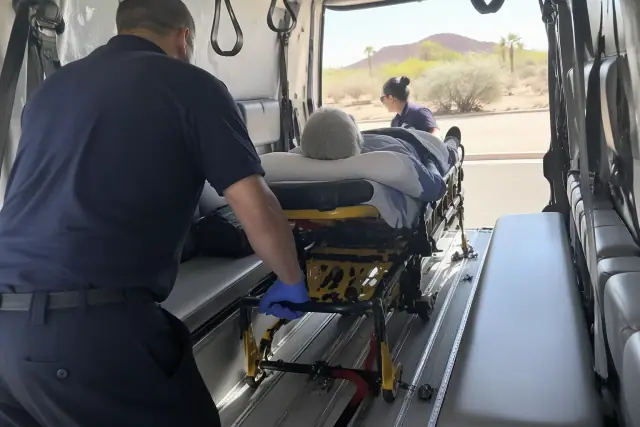
A stretcher may be needed for a hospital-to-home or rehab transfer. Medicare coverage still depends on whether ambulance transport is medically necessary, not simply whether a stretcher is used.

The physician documents why another form of transportation could endanger the patient. The ambulance provider uses the clinical records and required certification to support the coverage review.
Check whether you have Original Medicare, Medicare Advantage (Part C), or both Medicare and AHCCCS. A supplemental transportation benefit may cover a routine ride that Original Medicare excludes.
Medicare Advantage copays and trip limits vary by plan. For a private-pay ride, ask for the total trip quote, including mileage, wheelchair or stretcher equipment, and whether one or two attendants are needed.
Coordinate a standing schedule for dialysis or chemotherapy with the care team. When recurring trips require an ambulance, ask the provider about prior authorization before the schedule begins.
A medical appointment, lack of a family ride, or a signed order alone does not guarantee Medicare payment. Confirm the benefit and required documentation before committing to transport charges.
| Ride or benefit | Coverage answer | Before booking |
|---|---|---|
| Routine wheelchair, stretcher-car, or ambulatory ride | Original Medicare does not cover routine non-ambulance transportation. | Check supplemental plan benefits, AHCCCS eligibility, or the private-pay cost. |
| Medically necessary non-emergency ambulance | Part B may pay when the patient needs ambulance transport and all coverage requirements are met. | Coordinate medical records, required certification, and any prior authorization with the ambulance provider. |
| Medicare Advantage supplemental transportation | Some plans include rides to appointments, dialysis, or pharmacies. | Confirm covered destinations, trip limits, copays, and how the plan arranges rides. |
| AHCCCS medical transportation | Eligible Arizona Medicaid members may receive rides to covered care under program rules. | Contact the health plan to confirm eligibility and arrange appropriate transportation. |
| Private-pay medical transport | The patient or family pays when no applicable benefit covers the ride. | Request a quote based on distance, equipment, and transfer assistance. |
Medical necessity depends on the patient's condition during transport. Bed confinement, a need for in-transit monitoring, or movement that could endanger health may support ambulance transport, but the records must explain why other transportation is unsafe. A physician's order alone does not establish coverage, and a wheelchair, stair chair, or bariatric equipment need does not automatically qualify a trip. Ambulance providers submit clinical documentation and appropriate billing codes, such as A0428 for basic life support non-emergency transport and A0425 for ground mileage. Correct coding supports a claim; it cannot turn a routine ride into a covered ambulance service.
For patients who medically need an ambulance for repeated dialysis or other appointments, Medicare's Repetitive Scheduled Non-Emergent Ambulance Transport process deserves attention before rides begin. Medicare describes the recurring schedule as 3 or more round trips in a 10-day period, or at least once a week for 3 weeks or more. Ask the ambulance provider about requesting prior authorization before the fourth round trip in a 30-day period so coverage can be reviewed early. For scheduled repetitive ambulance services, the required physician certification must be dated no earlier than 60 days before the service date. Keep the care team and ambulance provider involved as the schedule or patient's condition changes.
Does Medicare pay for hospital-to-rehab transport? It may cover a medically necessary ambulance transfer; a routine discharge ride generally falls outside Original Medicare coverage. Are dialysis or chemotherapy rides automatically covered? No. The treatment alone does not establish ambulance medical necessity, so check Medicare Advantage transportation benefits or AHCCCS eligibility for routine trips. What about longer trips from Mesa to Phoenix or Tucson? Distance alone does not qualify a ride: covered ambulance travel must meet medical necessity rules and is generally limited to the nearest appropriate facility able to provide the needed care. Is private medical transport priced by the hour? Medical transport is commonly quoted per trip based on mileage, equipment, and assistance needs; request the full quote before booking.
Mesa Medical Transport coordinates wheelchair, stretcher, and ambulatory rides across Mesa and the East Valley, including Tempe, Chandler, and Gilbert. Share the pickup and destination, appointment time, and mobility or transfer needs so the team can provide an upfront quote. For a hospital discharge, include the discharge planner in scheduling, and confirm any insurance transportation benefit with your plan before booking.