Wheelchair Transportation
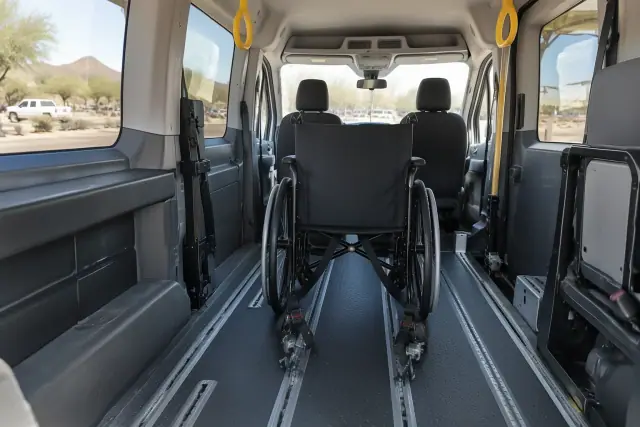
Hydraulic lifts and four-point wheelchair securement keep your chair stable during travel. Crews use safe transfer techniques and gentle handling for routine checkups and specialist visits across the Valley.
Explore Service
Mesa Medical Transport provides wheelchair transportation in Queen Creek, AZ, with accessible vehicles and trained crews for non-emergency trips. We also arrange stretcher and gurney transportation for riders who cannot sit upright, plus ambulatory transportation for patients who need light assistance. Our services cover medical appointments, recurring treatments, and hospital discharge trips. Tell dispatch about your mobility needs so we can plan the vehicle and assistance for your ride.
Getting from a Queen Creek neighborhood to an East Valley clinic can be difficult when sidewalks and transit routes do not reach your home. Rural stretches along Combs Road and Rittenhouse Road add another challenge for families arranging dependable pickups. Our dispatch team plans around appointment times and confirms pickup windows in advance. Call with your destination and handling requirements to arrange a trip that fits your care schedule.
We serve Encanterra, Ironwood Crossing, Meridian, Harvest, and Pecan Creek, with routes into Gilbert, Chandler, Apache Junction, and Mesa. Coverage spans both Maricopa and Pinal County, so the county line does not interrupt your transport arrangements.
Choose transport around the rider's mobility, treatment schedule, and destination. Our routes connect Queen Creek homes with East Valley hospitals and clinics, including pickups in San Tan Valley, AZ for patients traveling to their care teams. Dispatch can arrange a single appointment ride or a standing treatment schedule.
Hydraulic lifts and four-point wheelchair securement keep your chair stable during travel. Crews use safe transfer techniques and gentle handling for routine checkups and specialist visits across the Valley.
Explore Service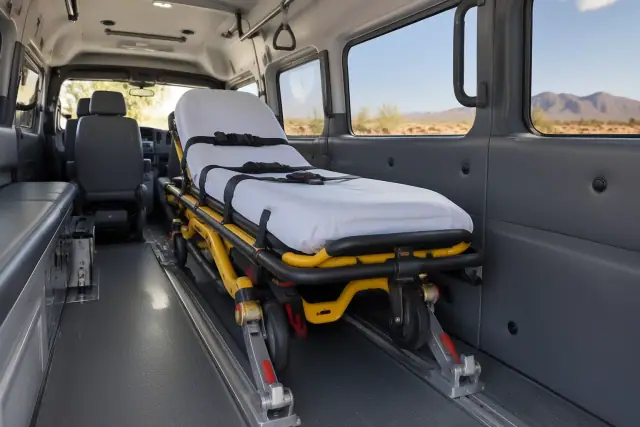
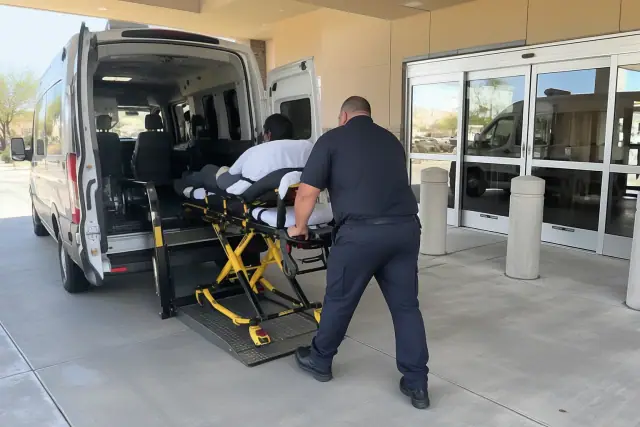
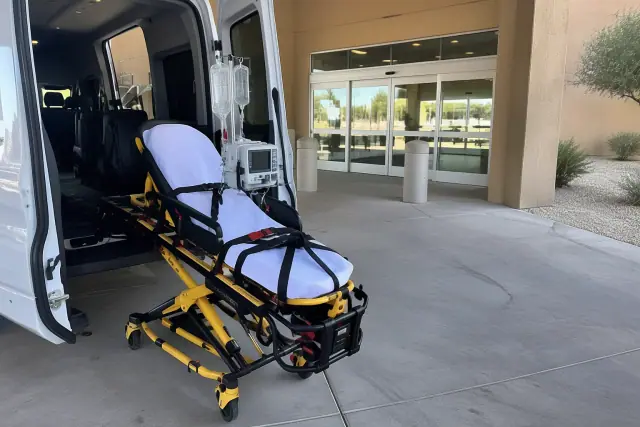
Gurney-equipped vehicles serve riders who cannot sit upright, including bed-bound patients and those needing post-surgical or inter-facility transfers. Commercial-grade fasteners secure the gurney, while crews follow body mechanics protocols during loading and unloading.
Explore Service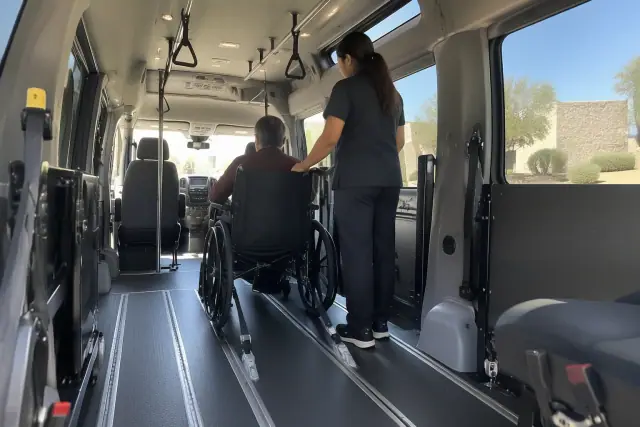
Patients who can walk with minimal assistance can arrange a steady arm and a ride to their appointment. Ambulatory transport supports seniors, post-anesthesia patients, and people taking new medications who should not drive themselves.
Explore Service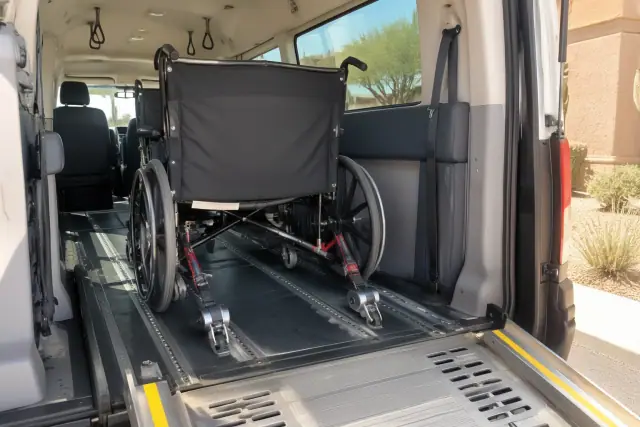
Reinforced ramps, wider securement systems, and heavy-duty lift equipment accommodate higher-weight patients. Two-person crews trained in bariatric transfers plan the handling and equipment around the rider's needs.
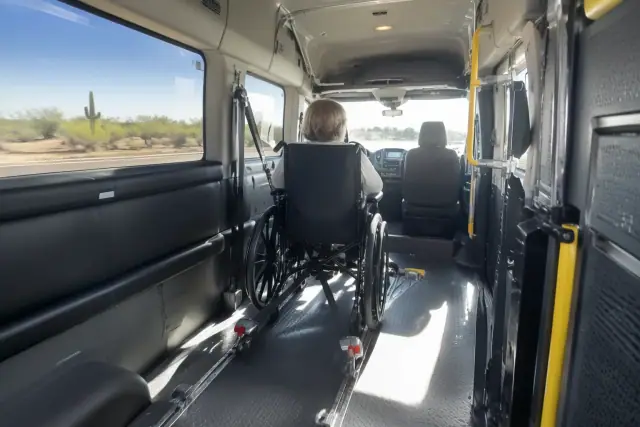
Dialysis commonly requires a strict schedule three times a week. We establish standing routes and coordinate with treatment centers around chair times so recurring transportation is arranged in advance.
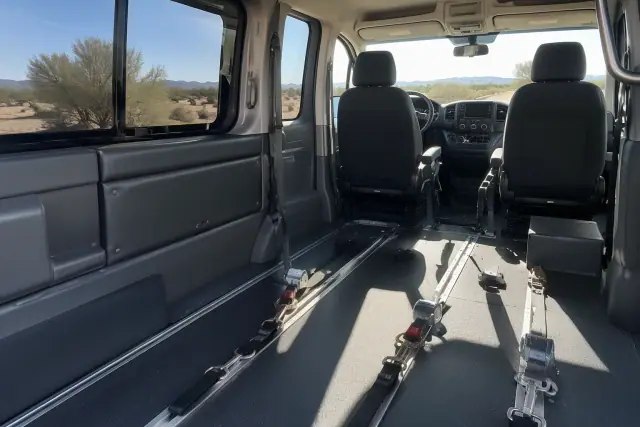
We coordinate pickup with East Valley hospital case managers as discharge paperwork is completed. Crews can bring a wheelchair or stair chair to the bedside when needed, assist with the trip home, and provide basic setup assistance inside.
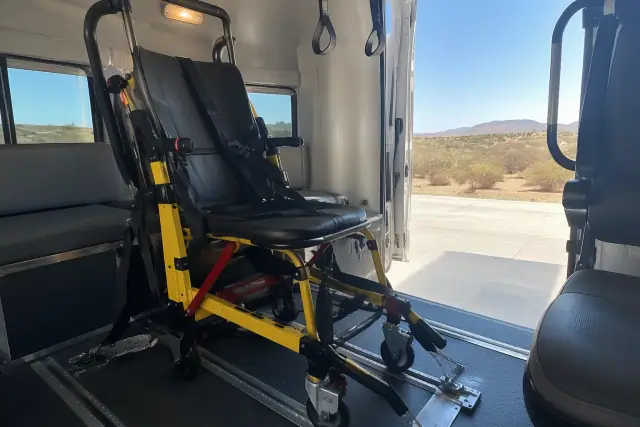
Stair chairs help crews move patients at homes and facilities without elevator access. Describe the steps and access conditions when booking so dispatch can plan the appropriate equipment and transfer assistance.
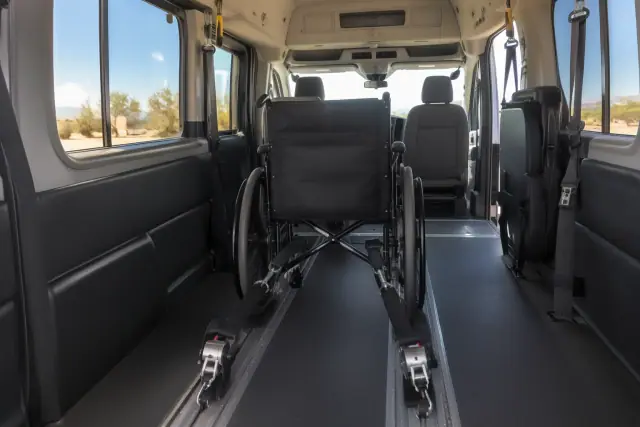
Trips to Tucson, Flagstaff, and out-of-state treatment destinations are scheduled ahead with route planning, rest stops, and patient monitoring. Extended trips are staffed and planned around the patient's condition and Federal Motor Carrier Safety Administration hours-of-service guidelines.
Crews trained in de-escalation provide calm, discreet transportation to psychiatric evaluations, residential treatment intake, and follow-up care. Scheduling, dispatch, and trip documentation follow HIPAA practices for handling patient information.
Standing chemotherapy rides are coordinated with treatment centers around appointment times. Arrange recurring transportation in advance so each infusion visit has an established pickup plan.
Book one-way, round-trip, or standing weekly rides around your provider's calendar. Dispatch tracks destinations in the Gilbert, Chandler, and Mesa medical corridors and confirms appointment pickup windows the day before.
Start with how the patient travels and how much assistance the trip requires. Nationally, wheelchair transportation accounts for roughly 30% of non-emergency medical transport trips, while stretcher transport accounts for around 6%. Those are different equipment needs; tell dispatch whether the rider can walk, remain seated, or needs to lie down.
Describe the wheelchair, walker, or transfer equipment the patient uses. Our accessible vehicles have lifts or ramps and appropriate interior clearance, with specialized options for stretcher and bariatric transportation.
Safe handling matters at both ends of the trip. Our crew members complete transfer and mobility-equipment training, while bariatric transfers use staff trained specifically for that work.
Share the appointment time and destination before the ride is scheduled. Dispatch confirms your reservation and pickup window in advance, and standing bookings give recurring patients an established schedule.
A ride is only part of the trip when a patient needs help entering a clinic or getting home. Our drop-off assistance extends into the facility, with door-to-door transfer and basic setup assistance for discharge rides home.
Distance, vehicle type, and one-way or round-trip travel affect the quote. We explain the price before each ride and help patients identify applicable coverage; confirm plan benefits before relying on insurance for a booking.
Appointment details and mobility needs should be handled discreetly. Our scheduling, dispatch, and documentation practices follow HIPAA requirements, including for behavioral health transportation.
Queen Creek's population rose from 59,519 at the 2020 census to an estimated 83,700 in 2024. New neighborhoods and longer trips to hospitals can make accessible transportation harder to arrange. A planned ride helps families address the route, equipment, and appointment timing together.
Plan My RideMany neighborhoods east of Ellsworth Road and south of Germann Road have no fixed-route transit access. Pickup at the home helps patients avoid depending on an inaccessible walk to a transit stop.
A general rideshare vehicle may not have the lift, clearance, or securement needed for wheelchair travel. Explain your mobility equipment to dispatch so the ride uses a vehicle suited to it.
A missed pickup can disrupt dialysis chair time or a chemotherapy infusion appointment. Standing routes and direct coordination with treatment centers help keep transportation aligned with recurring care.
A patient may be ready to leave only after paperwork is complete, making a fixed ride time difficult to judge. We coordinate with case managers to plan pickup around the discharge process.
Stairs and entrances without elevator access can complicate a transfer even when the vehicle is accessible. Describe the access route when booking so crews can plan stair chair assistance where needed.
Detours on Ellsworth Loop, Hawes Road, and Ocotillo Road can change travel times to care. Dispatchers familiar with those routes account for local construction when planning appointment trips.
Our crews work on both sides of the Maricopa and Pinal County line every week. Familiarity with clinic entrances, hospital loading areas, and local traffic supports trip planning, while training and equipment maintenance support the patient transfer itself.
We serve neighborhoods near Queen Creek Marketplace and Horseshoe Park as well as the unincorporated stretches near Ironwood Drive and Hunt Highway. Dispatch plans trips across the local road network and into surrounding medical corridors.
Crew preparation includes background screening, defensive driving instruction, and mobility-equipment training. Drivers carry current CPR and first aid certification, and crews communicate with patients or family members if a delay occurs.
Lifts, ramps, and securement hardware receive routine mechanical and equipment inspections. Our vehicles meet Americans with Disabilities Act accessibility requirements for lift capacity, ramps, and interior clearance.
Dispatch gathers the trip details before assigning a pickup window. The crew then handles boarding, travel, and assistance at the destination, with communication throughout the ride.
Call with the pickup address, destination, appointment time, and any special handling instructions. Include the mobility equipment needed and any stairs or access barriers at the pickup point.
Review the vehicle type, one-way or round-trip arrangement, and price with dispatch. Confirm the reservation and pickup window, and discuss a standing schedule if appointments repeat.
The crew assists with the transfer using the appropriate lift and securement procedure. Boarding is planned around the patient's mobility and the equipment arranged for the trip.
Crews monitor the patient during travel and track the appointment time. If a delay occurs, they communicate directly with the patient or family so everyone understands the updated arrival plan.
Drop-off includes assistance into the facility. For hospital discharge trips, the crew helps with the transfer home and basic setup assistance once the patient is inside.
Patients returning for dialysis, chemotherapy, or weekly appointments can set up standing reservations. Dispatch coordinates those trips around the treatment schedule so a separate booking call is not needed each week.
Case Study 1: Recurring treatment: Standing dialysis and chemotherapy routes give patients and families a pickup plan for repeated visits. Coordination with the treatment center keeps transportation connected to chair times and appointment schedules.
Case Study 2: Returning home: Discharge transportation connects the hospital bedside with the home entrance. Wheelchair or stair chair assistance can be arranged when needed, along with help getting settled inside.
Case Study 3: Specialist visits: Local appointment rides reach East Valley medical corridors, while advance planning supports trips farther from home. Long-distance transport includes rest stops and monitoring suited to the patient's condition.
Call Mesa Medical Transport with the appointment time, destination, and assistance needed. We schedule 24/7 medical transport for early treatments, late discharges, and other non-emergency trips outside usual business hours. Dispatch will confirm availability, the pickup window, and a clear quote.
Find answers about booking, accessible vehicles, recurring treatments, and payment arrangements. Dispatch can discuss the details that affect your trip and confirm the transport option for your needs.
Ask DispatchThe right option depends on mobility and the assistance needed. A senior who walks independently may only need a general ride, while a wheelchair user or someone needing transfer help should look for equipment and trained patient handling. Our service focuses on riders who need assistance getting to medical care.
The Phoenix metro area has several senior ride options through county aging services, nonprofit senior centers, and public transit paratransit programs. Eligibility, registration, advance scheduling, and service hours vary by program. Queen Creek families can use community transportation alongside scheduled medical transport when appointment timing or mobility assistance requires a different arrangement.
Call dispatch with your pickup address, destination, appointment time, and mobility equipment details. We recommend booking at least 24 to 48 hours ahead for standard appointments, and we confirm a pickup window before the ride. Shorter notice may be accommodated when the schedule allows.
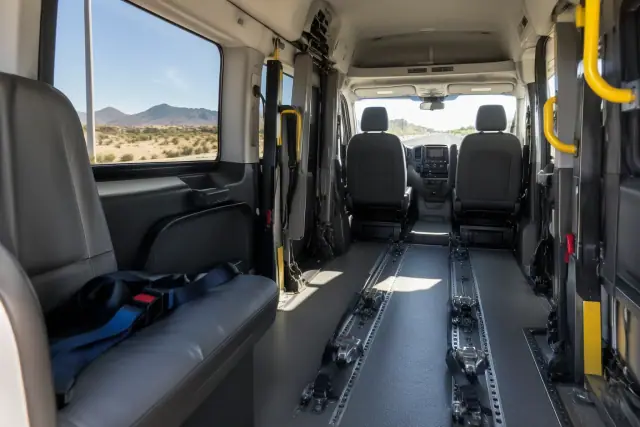
Our fleet uses hydraulic lifts or ramps, four-point wheelchair securement, and interior clearance that meets Americans with Disabilities Act accessibility standards. Stair chairs are available for access without an elevator. Tell dispatch about your equipment and entrance conditions so the appropriate assistance can be arranged.
Our non-emergency service provides planned rides to appointments, treatments, and hospital discharges for patients who need transportation assistance. Crews use safe transfer procedures and basic patient monitoring, but do not provide emergency medical intervention or respond to 911 calls. For an acute, life-threatening emergency, call 911.
Same-day requests can be accommodated when the schedule has availability, particularly for hospital discharge or appointment needs. Book as early as possible because weekday openings can fill quickly. Patients on standing schedules retain priority for their regular time slots.
Yes, we arrange medical trips to Tucson, Flagstaff, and out-of-state destinations. Planning includes rest stops, monitoring, and routing around the patient's condition and mobility needs. Give dispatch as much advance notice as possible so crew and vehicle arrangements can be made.
Original Medicare does not typically cover routine scheduled wheelchair van rides to appointments or dialysis. Some Medicare Advantage plans include a limited non-emergency transportation benefit. Check your specific plan documents and confirm eligibility before booking; a ride is not automatically free because a patient has Medicare.
Options include AHCCCS-arranged rides for qualifying members, public paratransit for eligible riders, and private medical transport. AHCCCS coverage depends on eligibility, medical necessity, and the absence of other transportation. Private transport can provide wheelchair or stretcher service with assistance beyond the curb; confirm plan benefits and payment arrangements before your first ride.
Yes, recurring patients can establish a standing schedule coordinated with their treatment center. Industry data describes close to $12,000 a year in transportation activity for a single dialysis patient using wheelchair transport, showing the importance of organizing recurring rides and payment arrangements. That annual activity figure is not an individual trip price; dispatch provides a quote for your ride.
We coordinate with hospital case managers and plan pickup around discharge paperwork. Crews can bring a wheelchair or stair chair to the bedside when needed. The trip includes transfer assistance home and basic setup help once the patient is inside.
Pricing depends on distance, vehicle type, and whether you need one-way or round-trip transportation. Recurring dialysis and appointment schedules typically cost less per trip than one-off bookings. We provide a clear quote before every ride so you can review the cost before confirming.
Our coverage includes Encanterra, Ironwood Crossing, Meridian, Harvest, Provinces, and Pecan Creek, plus areas around Queen Creek Marketplace and Horseshoe Park. Routes extend into San Tan Valley, Gilbert, Chandler, Apache Junction, and Mesa. We work across both Maricopa and Pinal County, including unincorporated areas near Ironwood Drive and Hunt Highway.
Explain those needs when booking so dispatch can arrange the appropriate transport. Bariatric service uses reinforced ramps, wider securement systems, heavy-duty lifts, and two-person crews trained for those transfers. Patients who cannot sit upright can use stretcher and gurney transportation.
Crews use de-escalation training and a calm, discreet approach for evaluations, treatment intake, and follow-up visits. Scheduling, dispatch, and documentation follow HIPAA practices for patient information. Discuss handling needs with dispatch when arranging the trip.