Proudly serving Mesa, Gilbert, Chandler, Tempe, Scottsdale, Apache Junction & surrounding areasCall or Text 24/7: 602-601-2703
Aerial drone view of a suburban neighborhood with stucco homes and desert landscaping in Mesa, AZ.

Stretcher & Gurney Transportation in Mesa, AZ for Hospital Discharges & Treatments

Mesa Medical Transport provides stretcher and gurney transportation in Mesa, AZ, for patients who need to travel lying down. We arrange non-emergency rides for hospital discharges, dialysis, chemotherapy, and medical appointments. Wheelchair and ambulatory transportation are also available when a seated ride matches the patient's mobility needs. Tell us about the trip so we can match the vehicle, equipment, and assistance to the patient.

Getting home from a Mesa hospital can be difficult when a loved one cannot sit upright for the drive. We coordinate with case managers and discharge planners to carry care notes and positioning instructions through the transfer. Our attendants prepare the gurney and check securement before departure. Contact dispatch with the discharge window, destination, and access details to plan the pickup.

Our attendants complete background screening and maintain current CPR and first aid certification. Vehicles are maintained to commercial vehicle safety standards under Arizona Department of Transportation regulations.

Mesa Medical Transport provides stretcher and gurney transportation in Mesa, Tempe, Chandler, Gilbert, Apache Junction, Queen Creek, and the greater Phoenix metro area.

★ ★ ★ ★ ★4.9/5 Average Customer Rating · 19 Years of Transportation Experience · 10,000+ Patient Rides Completed · Licensed & Fully Insured · Serving Patients, Families & Care Facilities

Stretcher Transportation Options & Benefits

What Is Non-Emergency Stretcher Transportation?

Non-emergency stretcher transportation is a planned ride for a patient who needs to remain lying down instead of sitting in a car or wheelchair. The patient travels on a secured gurney with attendants who assist with transfers and observe comfort during the trip.

A wheeled gurney provides adjustable head and leg elevation, side rails, and multiple safety straps. It locks into the vehicle floor track for travel, while transfer equipment helps move the patient between a bed, facility room, and vehicle.

Mesa has more than 504,258 residents and is Arizona's third-most populous city, as well as the largest city in the country that is not a county seat. For families arranging care across this part of the East Valley, a transport plan needs to account for both the patient's mobility and the receiving facility's schedule.

How a Planned Gurney Ride Helps

A suitable vehicle is only part of the trip. Transfer assistance, positioning, communication, and arrival arrangements help the ride fit the patient's care needs.

  • Travel lying down when sitting upright is restricted
  • Adjustable head and leg positioning
  • Gurney securement with straps and a locking floor track
  • Trained assistance between the bed and vehicle
  • Climate-controlled cabins for Mesa travel
  • Recurring pickups around treatment appointments
  • Care notes passed to the receiving team
  • A transport quote provided before pickup
Trips for Treatment and Recovery

Scheduled Stretcher Transport Services

The reason for the trip shapes the pickup window, transfer plan, and arrival arrangements. We coordinate these non-emergency services around the patient's needs and the care team's instructions.

Hospital Discharge Transportation

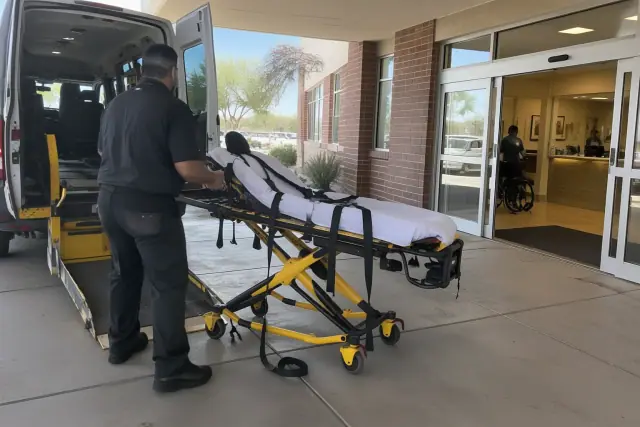
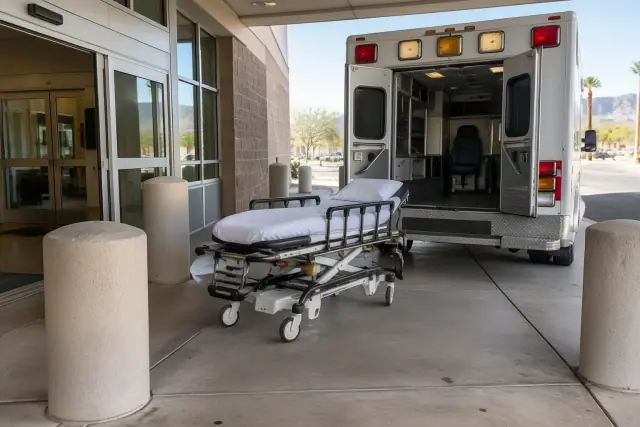
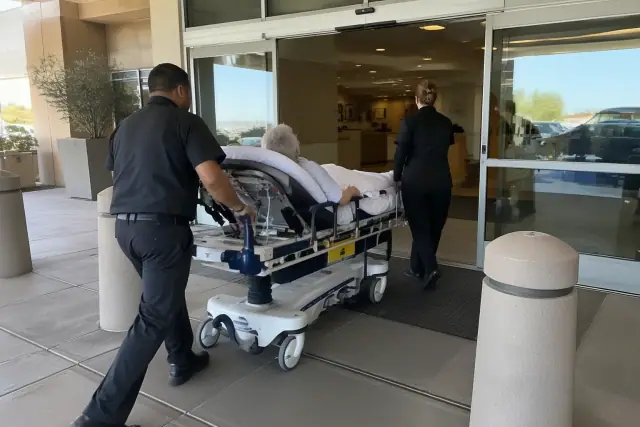
Hospital discharge stretcher transportation at a hospital loading bay in Mesa, AZ.

We coordinate pickup with case managers and discharge planners, including collection from recovery units. Arrival is planned with family or home health caregivers so a prepared bed and receiving assistance are ready.

Request Estimate

Dialysis Transportation

Stretcher transportation service at an outpatient dialysis clinic entrance in Mesa, AZ.

Many dialysis patients need transportation three times a week, making a recurring pickup schedule essential. We plan around fixed treatment appointments and account for fatigue or dizziness that may affect the return transfer.

Request Estimate

Chemotherapy Transportation

Medical vehicle lift and transfer pads for chemotherapy transport at a hospital in Mesa, AZ.

Infusion appointments can run longer than expected, so the return pickup needs coordination with the treatment team. Smooth travel and a climate-controlled cabin help address comfort when a patient feels nauseated or weak after treatment.

Request Estimate

Behavioral Health Transportation

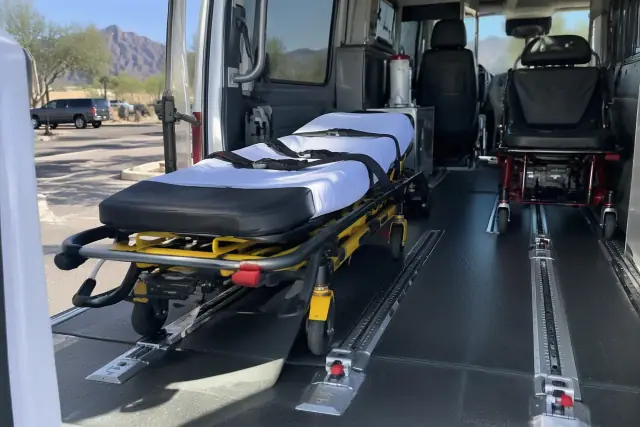
Behavioral health stretcher transportation van interior with secure floor tracks in Mesa, AZ.

Our attendants use de-escalation training and respectful communication for scheduled psychiatric appointments and facility transfers. Discreet vehicles and confidentiality procedures help protect patient privacy throughout the trip.

Request Estimate

Long-Distance Medical Transportation

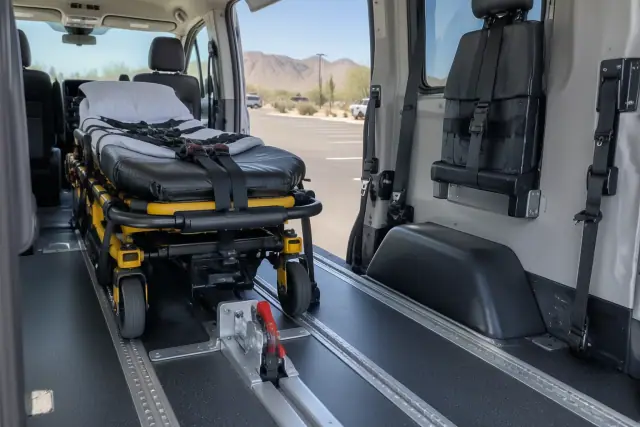
Medical cot restraint bracket locked to floor tracks inside a transport van in Mesa, AZ.

Trips to specialty care in Scottsdale, Tucson, Flagstaff, or out of state are planned around rest breaks, medication timing, and tolerance for extended travel. Long-distance vehicles have extended climate control, backup power for oxygen concentrators or IV pumps, and space for an attendant.

Request Estimate

Medical Appointment Transportation

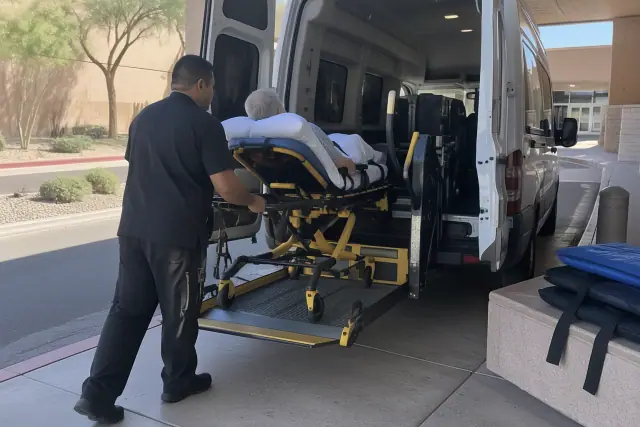
Medical appointment transportation for stretcher and gurney at a hospital loading bay in Mesa, AZ.

Stretcher transport supports scheduled appointments when a patient cannot comfortably or safely complete the drive seated. Provide the appointment window and mobility details so dispatch can arrange the vehicle and transfer assistance around the visit.

Request Estimate
Match the Ride to the Patient

Equipment and Mobility Options

Patient weight, sitting tolerance, transfer needs, and building access guide the equipment selection. Tell dispatch about these details before booking so the transport plan fits the patient and the pickup location.

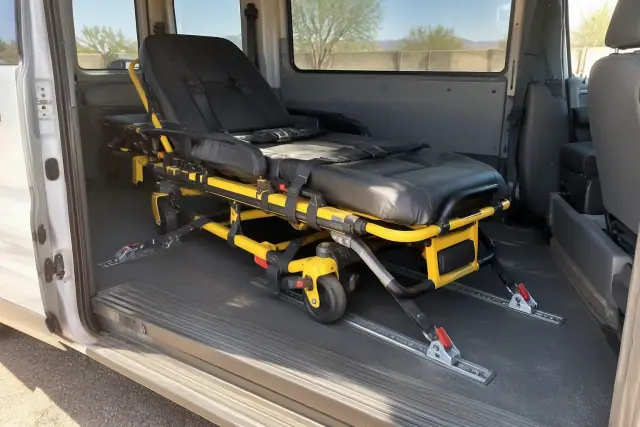
Standard stretcher and gurney transport secured in a vehicle in Mesa, AZ.

Standard Stretcher and Gurney Transport

A wheeled gurney supports lying-down travel with positioning adjusted for comfort or physician instructions. The crew checks the equipment and patient securement before the vehicle moves.

  • Adjustable head elevation
  • Adjustable leg elevation
  • Supportive side rails
  • Straps across the chest, waist, and legs
  • Gurney locking into the vehicle floor track
Request Estimate
Bariatric stretcher secured inside a transport van in Mesa, AZ.

Bariatric Stretcher Transport

Heavier patients may need wider equipment and additional transfer assistance. Sharing patient weight when booking lets dispatch plan the reinforced gurney and staffing required for the trip.

  • Reinforced stretcher frames
  • Wider gurneys for patient support
  • Patient weight reviewed before assignment
  • Additional trained transfer attendants
  • Equipment and crew needs reflected in the quote
Request Estimate
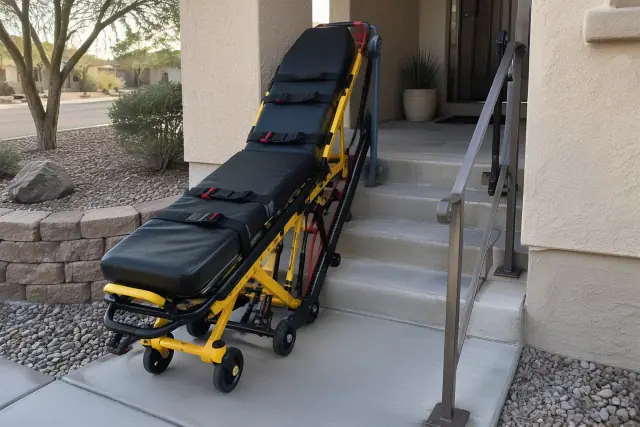
Stair chair access assistance for stretcher transport on a residential porch in Mesa, AZ.

Stair Chair Access Assistance

A track-style stair chair can help with stairs, tight turns, and narrow doorways that a full-size gurney cannot clear. Because the chair supports the patient upright, discuss positioning restrictions and the access route before arranging this option.

  • Mechanical track-style stair chair
  • Trained equipment operators
  • Secured, supported upright positioning
  • Access planning for multi-level homes
  • Transfer to the gurney at ground level
Request Estimate
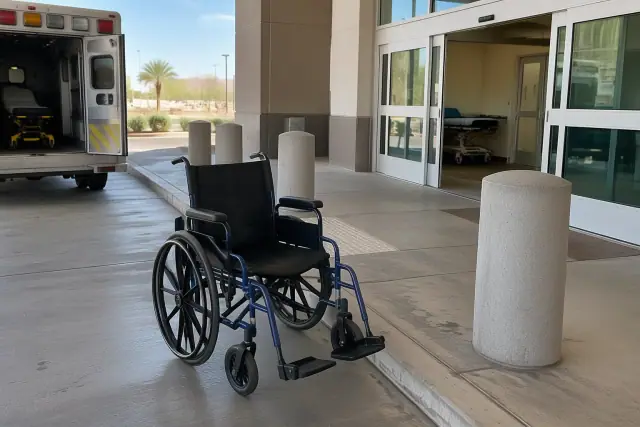
Wheelchair for medical transport at an ambulance bay in Mesa, AZ.

Wheelchair Transportation

Wheelchair transportation is another option for patients whose mobility needs allow seated travel. Dispatch reviews the level of assistance required so the vehicle and transfer arrangements suit the patient.

  • Wheelchair-accessible vehicle
  • Mobility needs discussed during booking
  • Pickup and destination details reviewed
  • Appointment timing included in the plan
  • Assistance matched to transfer needs
Request Estimate
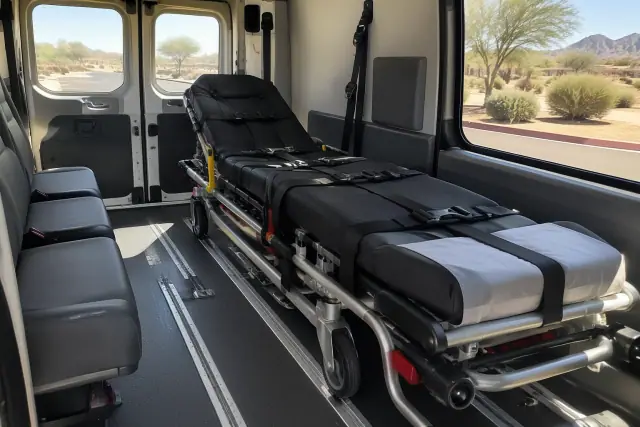
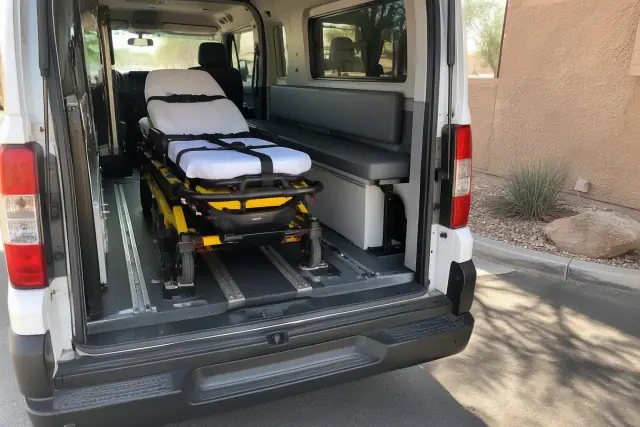
Stretcher and gurney transportation vehicle interior in Mesa, AZ, showing secure floor tracks and padded cushioning.

Ambulatory Transportation

A patient who can walk short distances may need standby assistance without requiring a stretcher ride. We adjust equipment and staffing to the level of help needed for the journey.

  • Support for short-distance walking
  • Standby assistance as needed
  • Access to a wheelchair-accessible vehicle
  • Equipment selected for the patient
  • Staffing adjusted to mobility needs
Request Estimate
Patient Needs Come First

Planning the Right Stretcher Ride

Tell us how the patient needs to be positioned, what assistance is needed for transfers, and who will receive them at the destination. We use those details to plan equipment, staffing, and timing before confirming the ride.

Trained Transfer Attendants

Our attendants train in transfer techniques that address the risk of falls and shear injuries during handling. Lead attendants typically hold EMT-Basic or equivalent certification along with current CPR and Basic Life Support training.

Coordinated Care Handoffs

We communicate with discharge planners and the receiving care team so paperwork, vitals, and care notes accompany the patient. Every crew member completes HIPAA training before working a shift.

Clear Quotes Before Pickup

We provide the quote before pickup so families can review the cost of the planned trip. Bariatric equipment, additional staffing, distance, and overnight crew needs are considered before the ride is arranged.

Support From Pickup to Arrival

Help With Difficult Patient Transfers

A routine appointment can involve a demanding transfer when a patient is recovering from surgery, weak after treatment, or leaving a home with difficult access. We review those challenges with you before assigning the equipment and crew.

Discuss Your Transport Needs

Unable to Sit Upright

Spinal injuries, hip fractures, late-stage ALS, hospice needs, or post-operative restrictions can make a seated ride unsuitable. Stretcher transport accommodates lying-down travel and the positioning instructions provided by the care team.

Weakness After Treatment

Dialysis or chemotherapy may leave a patient fatigued, dizzy, or nauseated even if they arrived feeling stronger. Discuss return-trip assistance when booking so the transfer plan accounts for post-treatment needs.

Discharge Timing Changes

A discharge pickup depends on hospital readiness as well as transport availability. Sharing the expected release window and caregiver contact details helps coordinate departure with an arrival at a prepared destination.

Stairs and Narrow Hallways

Split-level homes near Dobson Ranch and two-story properties in Las Sendas or Red Mountain Ranch can present tight access routes. Describe stairs, narrow doorways, and difficult turns before pickup so dispatch can review suitable access equipment.

Transfers Requiring Extra Support

A heavier patient may need a reinforced gurney and more attendants for the transfer. Accurate weight and mobility information lets dispatch arrange that support instead of relying on equipment or staffing that does not fit.

Heat and Travel Discomfort

Mesa summer surface temperatures can push past 110 degrees, making cabin climate control especially relevant for vulnerable passengers. Older patients also need careful handling and extra transfer time for fragile skin and reduced bone density.

From Booking to Bedside

Our Stretcher Transport Process

Research on transportation interventions has reported missed-appointment rates dropping from roughly 20 percent to around 12 percent when reliable transport is arranged. Our booking and transfer process focuses on coordinating the details that help patients reach scheduled care.

01.

Share the Trip Details

Call or submit an online request with patient weight, mobility level, oxygen or IV needs, pickup and destination addresses, and the appointment window. Include access obstacles and any positioning instructions.

02.

Confirm Equipment and Staffing

Dispatch assigns a vehicle for the trip and a two-person crew trained for the patient's needs. Bariatric or other transfer requirements may call for additional attendants, with the transport quote provided before pickup.

03.

Coordinate the Pickup

The crew works with facility staff or caregivers to prepare the patient for transfer. Surgical positioning orders accompany the trip, and transfer technique is adjusted to the patient's handling needs.

04.

Check Gurney Securement

Attendants secure the patient across the chest, waist, and legs, set head elevation, and lock the gurney into the vehicle floor track. They check straps, oxygen tanks, and monitoring equipment before departure.

05.

Observe During the Ride

Attendants watch for changes in breathing, skin color, and reported pain while staying in contact with dispatch and the receiving facility. They monitor existing oxygen delivery and IV lines but do not administer medication.

06.

Complete the Care Handoff

The crew coordinates arrival with facility staff, home health, or family caregivers and assists with the destination transfer. Care notes accompany the patient, and any observed change is reported to the receiving team.

Plan the Next Ride

Request a Stretcher Transport Quote

Have the pickup address, destination, appointment time, patient weight, and mobility details ready. Dispatch can review the equipment, access, and staffing needs with you and provide a quote before pickup.

Booking and Care Questions

Stretcher & Gurney Transportation FAQs

Find answers about gurney equipment, scheduling, access, pricing, and insurance questions before arranging a ride. Share patient-specific requirements with dispatch so they can review the trip details.

Speak With Dispatch

The terms are often used interchangeably, but a stretcher generally means a portable frame for carrying a patient, while a gurney is a wheeled frame. Our transport gurneys have adjustable head and leg positioning, multiple safety straps, and a locking vehicle floor track. A portable stretcher or stair chair may be used for the transfer to the vehicle, depending on access and positioning needs.

Medicare Part B may cover ambulance-level transportation when medical necessity and documentation requirements are met. Routine private stretcher van service generally falls outside that benefit. When qualifying ambulance transport is covered, coinsurance is typically 20 percent after the Part B deductible is met. Check the specific trip requirements before relying on reimbursement.

AHCCCS, Arizona's Medicaid program, provides non-emergency medical transportation for eligible members when the trip is medically necessary and arranged through the member's health plan transportation broker. Stretcher-level trips may require prior authorization and documentation that another reasonable transport option is unavailable. We can help families understand the authorization steps before booking, while the health plan determines coverage.

The right option depends on mobility, transfer assistance, and whether the person can safely sit upright. Community paratransit or volunteer driver programs may suit independent seniors, while wheelchair transportation supports seated travel with mobility assistance. Stretcher and gurney transport is an option when illness, injury, or frailty requires lying-down travel.

Traditional Medicare does not provide a blanket free transportation benefit for seniors, and routine appointment rides generally are not covered. Some Medicare Advantage plans include a limited transportation benefit with their own trip and mileage limits. Check with the specific plan before booking a ride.

Book recurring dialysis or chemotherapy rides as early as possible so pickup schedules can be coordinated around treatment. We offer 24/7 scheduling options and accept same-day requests, with short-notice trips dependent on vehicle and crew availability. Providing mobility, weight, and equipment details at the first call helps dispatch confirm the appropriate ride.

Tell dispatch about stairs, tight turns, and narrow doorways before booking. A mechanical stair chair can help with access that a full-size gurney cannot manage, followed by a transfer to the gurney at ground level. The stair chair supports the patient upright, so discuss any restrictions on sitting with the care team and dispatch before planning this transfer.

Our attendants pass background screening and maintain current CPR and first aid certification. Lead attendants typically hold EMT-Basic or equivalent training, and crews complete HIPAA training. Transfer and stair chair training address safe handling and patient privacy throughout the trip.

Local, in-county trips generally start around $99 to $150 plus $3 to $4 per mile for patients under roughly 300 pounds. Bariatric transport, overnight staffing, and long-distance trips cost more to reflect additional equipment and crew time. National gurney transport base fares commonly range from $300 to $525 depending on market and distance. We provide the quote before pickup based on the planned trip.

The patient is secured with straps across the chest, waist, and legs, with head elevation adjusted for comfort or physician instructions. The wheeled gurney locks into the vehicle floor track. Attendants check the straps and relevant equipment before the vehicle moves.

Tell dispatch about oxygen and IV needs when requesting the ride so equipment and staffing requirements can be reviewed. Attendants monitor existing IV lines and oxygen delivery during transport and report changes to the receiving care team. They do not administer medication.

Extended trips are planned around rest breaks, medication timing, patient comfort, and the equipment needed along the route. Quotes account for total distance, staffing, and any overnight crew stay. For most patients, ground transport for trips under a few hundred miles costs less than air ambulance travel, but the patient's condition and required care must guide the transport choice. Each long-distance trip is quoted individually.

We provide stretcher and gurney transportation throughout Mesa, Tempe, Chandler, Gilbert, Apache Junction, Queen Creek, and the greater Phoenix metro area. Mesa pickups include downtown and the far east side near Apache Junction. Long-distance trips can also be arranged to specialty facilities in Scottsdale, Tucson, Flagstaff, or out of state.